PREFACE TO VALUABLE INSIGHT FROM FR. FRANCIS MCCATHY, O.S.B. ABOUT THE PREVELENT MALADY OF ACEDIA, A FOURTH CENTURY AFFLICTION.
Do you have one or more of these conditions?
- boredom of “ordinary” or “routine” life
- numbness
- disconnectedness
- fatigue
- restlessness
- dissatisfaction
- disengagement
- irritability
- depression
- weariness
- dryness
Then you may have Acedia, a condition that afflicted the desert fathers of the 4th century. Then and now the remedy was Chapter 48 of the Rule of St. Benedict:
- resist
- stay put
- show up
- do next right thing
- connect
- offer up frustrations
- return to the present moment
- focus outward, not inward
- read this short article for fast relief
November/December 2025 issue of PARABLE, a publication of the Diocese of Manchester, NH.
HEY FATHER, GOT A MINUTE? What is this feeling of SPIRITUAL NUMBNESS?
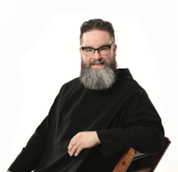
Author, Father Francis McCarty, O.S.B., is a Benedictine monk and priest of Saint Anselm Abbey in Manchester. He serves as the Director of Campus Ministry at Saint Anselm College.
Dear Father Francis, Lately, I’ve felt spiritually numb and disconnected from my usual routines of prayer and service. I’m not exactly depressed, but I’m not at peace either. Is there a name for this? What am I experiencing?
Fr. McCarthy writes:
This, my friend, is an experience that many people, including priests and religious, have had. And yes, there is a name for it! The early desert monks knew this feeling intimately. They called it acedia (pronounced uh-SEE-dee-uh).
Evagrius Ponticus, a 4th-century Desert Father (one of a group of early Christian hermits and ascetics, who lived primarily near and around Egypt), gave it a name long before psychologists or modern spiritual directors did. He famously called it the “noonday devil,” the temptation that creeps in when the sun is high and shadows are short, when energy wanes and resolve feels brittle. It is not quite sadness, not quite sloth. Acedia is spiritual fatigue that drains motivation and steals joy. It makes prayer feel futile, work meaningless and community burdensome. Sound familiar?
In our contemporary lives, however, acedia shows up in ways the ancients could never have foreseen: endless scrolling, neglected obligations, chronic dissatisfaction, and a restless search for stimulation that never satisfies.
It can feel like you’re running on a treadmill you never asked to be on or drifting without direction. It may manifest as distraction, boredom, irritability or disengagement. And yes, it looks a lot like depression.
But acedia is distinct: it is not only emotional exhaustion, but spiritual resistance: It is a refusal to engage in the life God has placed before us.
Many people first encountered the reality of acedia during the COVID-19 pandemic.
Suddenly cut off from their routines, communities and liturgical life, they found themselves listless, unmotivated and spiritually adrift. The initial shock gave way to an enduring weariness, where time felt flattened, and purpose dimmed. Even as restrictions lifted, many found it challenging to return fully to the rhythm of faith, work and service that had once grounded them.
What they were experiencing wasn’t simply anxiety or burnout. It was acedia, a numbing disconnection from vocation, prayer and the people God had placed in their path.
OVERCOMING ACEDIA:
For the Desert Fathers, the response to acedia wasn’t merely rest or escape. It was stability.
Evagrius counseled monks to remain in their cells, to pray the Psalms, to perform their duties.
St. Benedict’s Rule, written a century later, presciently built this insight into the very structure of monastic life. Chapter 48 of the Rule insists that “idleness is the enemy of the soul,” and balances prayer, reading, and manual labor to counteract the deadly drift of acedia.
When monks wanted to flee their duties or escape the confines of the cloister, St. Benedict’s answer was not a change of scenery but a change of heart. This is because the best antidote to acedia is to keep going.
Acedia tempts us to believe that somewhere else, in some other task, or some other vocation, we would finally feel more alive. It whispers, “This is not worth your time. You are not where you are supposed to be.” We long for escape. But true healing often comes not from fleeing, but from remaining.
Thus, in the monastic tradition, the answer to acedia is presence. Monks combat acedia by showing up: to the Divine Office, to their work, and to community meals. They don’t wait to feel inspired to do these things, but do them as an act of faith, trusting that God will meet them in their practice. However, you don’t need to live in a monastery to live in this way. St. Benedict envisioned his Rule as a “school for the
Lord’s service,” and it is not only for monks, but for any Christian desiring to grow in faith in our “ordinary” lives.
SO, WHAT CAN WE DO WHEN ACEDIA STRIKES?
First, name it. Naming acedia for what it is can be a spiritual breakthrough. Many of us live under its weight without ever realizing it has a name, let alone a history. Realizing you are not alone in your restlessness can be the first step toward healing. Acedia has haunted the faithful for millennia;
Second, stay put. Resist the temptation to flee, whether it’s from your job, your marriage, your prayer life or even your boredom. Instead, show up. Do the next right thing. Wash the dishes. Say your prayers, even if distracted. Take a walk without your phone. Be faithful to the task, even when your heart isn’t in it. This is not hypocrisy — it is hope;
Third, pray honestly. The Psalms are full of cries of fatigue, boredom, and spiritual dryness. “How long, O Lord?” is not a complaint to be silenced but a prayer to be offered. Let your frustration be part of your prayer. God does not need our piety. God desires our truth. God doesn’t only want to hear from us when times are good. He wants to hear from us, regardless of the circumstances we find ourselves in;
Fourth, connect. Acedia thrives in isolation. Talk to a friend, a spiritual companion, or your pastor. Read something that stirs your heart. Sing. Laugh. Serve someone. Let the rhythm of life outside your own head pull you back to the present moment. Acedia often drives us inward in the worst way, away from God, neighbor and even ourselves;
And fifth, rest, but not to escape. Rest not to avoid life, but to meet it again with open hands. Keeping the Sabbath, after all, is not an indulgence but a commandment. When we rightly keep it, we remember who we are and whose we are.
So, Acedia is not just an ancient monastic problem. It is a modern malaise that many of us suffer from without being able to name it. However, the good news is that our tradition provides us with tools to face it: prayer, community, meaningful work, and the gentle discipline of embracing the life God has given us. Stability is not stagnation. It is the soil where deep roots can grow. Stability allows us to grow where we are planted.
When the noonday sun blazes hot, and the devil whispers that you’re wasting your time, remember: the saints have heard that voice too. And they teach us to stay the course, to pray, to dig our hands into the earth in our ordinary tasks/lives, and to trust that God is present even in the dryness — especially in the dryness.